Showing posts with label Garden design. Show all posts

Saturday, December 10, 2011

Bog Garden Construction Started

There has been more rain since my last post and of course many more activities, so I only managed to pop out to start on the bog garden today.


I dug out a shallow circle in the middle of the triangle today, but there is still so much standing water that only the top edge is visible. I removed some more concrete from it and perhaps the drainage will improve now it's gone.


My plan is to plant each corner with sedge to provide a marker, so nobody walks into it by mistake, and a small shrub in the uphill corner (species undecided as yet). The Sprig has requested edible plants so I'm considering water chestnuts and mint in addition to native plants.


I am also considering building a small wall on the far side so that less driveway runoff enters the area. This bed has been waterlogged for two months, after all. Didn't smell the best when I was digging it up.

I've been digging elsewhere in the garden as well.


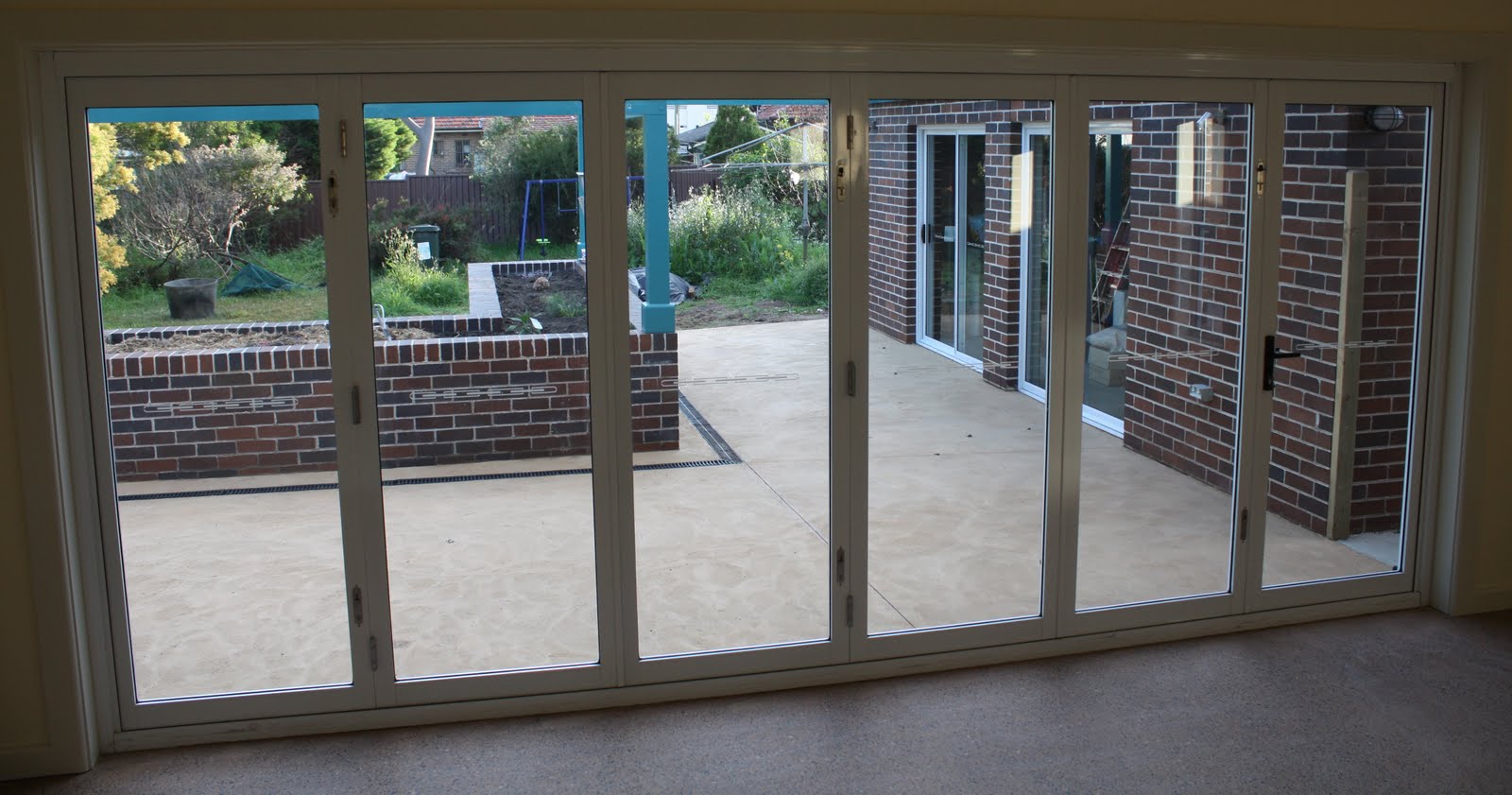
This grille is one of the entry points to our vast retention pit, where runoff from our driveway, patio and garage roof collects. Note that the water is very high and the soil is not level with the top of the grille, so we've had overflow around the shaft. This isn't much fun to step in by mistake, and the unevenness of the ground is rather dangerous. I've now made the area surrounding the grille level. There are plenty of uneven areas in the back yard for me to dig up for fill. At the moment the soil is soft enough and the weather cool enough for it not to be a great chore. I had not expected to do this work until autumn.

Sunday, November 27, 2011

Preparing for a Bog Garden

We had only 45 minutes of sunshine in Sydney last week.  The local rain gauge says we've had 137mm since the start of the month, more than one-and-a-half times the average.  That's La Nina for you!

There's a new garden bed between my newly-concreted driveway and path.  Well, there would be if I had added any soil to it -- it's just clay and a few weeds.  And 137mm of rainwater.


Our builders came back this week to deal with a few issues and The Geek was solemnly warned that this reservoir so close to the house was a Bad Thing, because the house is downslope. Initial excavations today have revealed some thin concrete inside the bed, which may have reduced the speed at which this water drains into the subsoil.  I am not hopeful that we can keep the area dry in the long term.


 This water is runoff from the driveway.  We are going to have a recurring problem here.  The subsoil is clay and if the soil is saturated, the excess water has nowhere to go.  If I were to mound up a garden bed on top of it, either the soil would wash away or the plants would drown.  I am going to have to allow for temporary flooding but want the excess water to be taken up by plants.  Now how does a frog habitat sound? 

What do frogs need?
  • Most common frogs don't require standing water; temporary ponds are enough
  • If there is a pond, it should have gently sloping sides as not all frogs can climb
  • Frogs need plenty of cover: shrubs, logs, tussock plants and so on
  • They frequent moist, shaded areas and can roam some distance from water sources
 What do tadpoles need?
  • Tadpoles do need some water
  • Tadpoles need water that isn't entirely shaded -- they eat algae, which grows in sunlit water
  • Tadpoles need oxygenated water.  Duckweed and Azolla tend to decrease oxygen levels and will need to be removed.
  • Tadpoles also eat the fungi and bacteria from decomposing plants
  • Tadpoles are sensitive to manure
What do people need?

  • Not to have frogs singing under their bedroom windows.  This location is away from our bedrooms and not too close to the neighbours' bedrooms either.

My plan is to create a dished depression in the middle of the triangle, add some leaf-litter and shelter, then plant the whole area with bog plants.    I imagine clumps of sedges at each corner as markers for people using the paths.  Nobody wants to fall into a bog, garden or not!

 The Australian Association of Bush Regenerators has put together a list of Frog-friendly Sydney plants here. I am particularly interested in these ones, as they are known to grow in my area:

  • Hydrocotyle peduncularis (Native Pennywort)
  • Persicaria decipiens (Knotweed)
  • Knobby Club-Rush (Isolepis nodosa)
  • Common Rush (Juncus usitatus)
  • Mat Rush (Lomandra longifolia)
Stay tuned!
If you are interested in encouraging frogs into your garden, I can recommend the following websites:

  • FATS, the Frog And Tadpole Study Group of NSW
  • The Frogs Australia Network has plenty of information for Australians about frogs. 
  • The Backyard Buddies programme helps children identify andd conserve local wildlife of all sizes.

Thursday, August 18, 2011

Transformations: Herb Bed

As you all know, our patio is L-shaped.


Our new herb bed, which encloses it, has weep holes on the outer side. Our builders advised painting it with a bituminous waterproofing compound to prevent damp when people might be sitting on or next to it.


This kind of planter needs to be well-drained, as the soil at the bottom tends to become sour if left to its own devices. We used broken brick and tile at the bottom, then Re-Agg (recycled concrete in aggregate-sized particles). A special planter box mixture went on top.


The white spiky thing in the middle of the bed isn't an aerial: it's electrical wiring for garden lights.


The fun part was planting it, of course. So far, the herbs are Coleus amboinicus, chives, savory, sage and thyme, and Russian garlic (the last after I took the photo). The flowers are a deep-blue lobelia and Veronica 'Oxford Blue', and my sons' strawberry plants.


At the bend are two plants. The first (just visible at bottom right) is a choko, which I hope will grow over the pergola fast enough to give us shade this summer. The rosette of large leaves is Echium candicans, Pride of Madeira. It should grow to fill the corner and produce wonderful blue flower spikes. I fell in love with this plant when I first saw it in Mildura, and again in the Melbourne Botanical Gardens.


I had to make one more change to the garden bed after the chickens discovered it and scratched the mulch up everywhere-- it now has a layer of light mesh over the top! Not attractive, but at least the plants won't be uprooted every time my back is turned!

I'm looking forward to adding a few more herbs: my rosemary has yet to be added. Oregano, marjoram and tarragon are definitely required, but there's a whole thyme family to consider...maybe a pineapple sage... bee-balm... I've always fancied a houseleek to protect against lightning... maybe I'd better stop now...

Sunday, July 24, 2011

Eryldene

If you visit a garden on a gloomy morning after a rainy week, you can get lucky. We were when we visited Eryldene yesterday. The rain held off, mostly, and numbers were down, so we were part of a small tour of the ikebana exhibition in the elegant house and had the garden mostly to ourselves -- great when a pair of boys need to let off steam after being indoors the whole week!


It's one of Sydney's most famous gardens, and the house is the only unaltered example of William Hardy Wilson's domestic architecture. Hardy Wilson felt that the Georgian style of house (from our early Colonial period) was better suited to Sydney's climate than the Arts-and-Crafts style of his day, and with a house like this one can see his point. Eryldene has the lightness and symmetry of Georgian architecture, modernised for 1913 (which, of course, no longer seems modern to us!). The house still has the furniture the Waterhouses used, mainly 18th and 19th Century pieces with an airiness and delicacy that match the house. The proportions are delightful, and the house is complemented by the current ikebana exhibition. (While Professor Waterhouse's gardening fame rests on his detailed work on Camellias, his wife Janet was devoted to ikebana, so it was lovely to see so much of it in her house -- I am sure she would have loved it. )

View from a sleepout to the front garden. This sleepout is now part of a cafe run by the volunteers of the Eryldene Trust. I can recommend the (plunger) coffee and mixed cakes.


View to the side garden from the same sleepout. The Sprig declared this to be "just like a picture," and how right he is.


This temple, designed by Hardy Wilson, is on a side axis in the front garden -- plenty of formal symmetry in this garden...


... but informality too. This path is behind the temple and runs very close to the street boundary -- but you'd never guess while you're walking on it!


The camellia walk runs up the eastern side of the house, and the collection her will interest even non-camellia enthusiasts. (Isn't it funny how sometimes a genus can take hold of a person?) Note the little path off to the side: there are little side-paths throughout the garden, subverting the formal structure. My children are keen to see me replicate this idea at home. A pity we lack Eryldene's acre of ground!


Hardy Wilson designed several different structures in the garden over a long association with the Waterhouses. I love this walled fountain (1921), particularly the low bubbling jet in front. Note the Asian influence: both Hardy Wilson and EG Waterhouse were Sinophiles.


The tea-house, on the edge of the tennis court, was built in 1927. We'd call it fusion, these days.


Somehow, I've never felt entirely comfortable about this moon-gate. I know it's part of a tennis-court fence, but the metal tubing construction always seems wrong to me, no matter how practical it is.


I do love one other feature of Eryldene: camellia flowers floated in bowls of water throughout the garden. I don't know if it is typical of large gardens of the period, but it's pretty.

So is this formal path.


(And yes, that little structure in the background is what you think it is. When the house was built, the area was unsewered.)

Garden tool enthusiasts will be sorry to hear that The Old Mole is closing, as the people involved are retiring to other projects, particularly travel. However, Richard Bird was at Eryldene with his beautiful tools at sale prices, and I picked up a few of them. I'll show them off another time.

Friday, October 22, 2010

Melbourne Botanical Gardens

I knew I wanted to see the Melbourne Botanical Gardens, but didn't realise that I would feel like I hadn't left Sydney!

Bits of the Royal Botanical Gardens, and Centennial Park and Vaucluse House, look pretty much like this. Apparently there was a peculiarly Antipodean muddling of the Picturesque and Gardenesque, and here you have it: meandering lakes and shrubberies, but specimen trees and elaborate borders included as well. (No, I can't quite conceptualise how people muddled Gardenesque and Picturesque together, but they did. It seems to be an Australian habit to pick the bits they like out of disparate ideas and mix them all together without regard for consistency.)

The garden, like the Sydney equivalent, is a lovely place to wander through but not so easy to photograph. Some of the borders were lovely:


How about these contrasts in texture and colour?


I took about half a dozen photos of Echium candicans, with stunning electric-blue spires of flowers. We wants it, my precious, we wants it! And I've seen Echiums growing in Sydney, so I know they can cope with our humidity. Now it's a matter of finding the plain Echium candicans, rather than a cultivar.


With the recent drought the Gardens staff have focussed more on water-wise plantings. I particularly admired this bed, on a steep bank overlooking the Yarra. I would love to know what the red-and-white bulbs are; I don't think they are tulips.


I definitely wanted to see the redesigned "Guilfoyle's Volcano". The famous director and designer of the Gardens had a reservoir built and designed a "volcano" garden for it as a kind of folly. The introduction of town water for irrigation led to the old reservoir being ignored for years, but recent drought has prompted a redesign. The new garden is very modern in style but still reads like a folly because it is so different from its surroundings. I loved it but felt I couldn't do it justice in photos. It is planted with thousands of different cacti and succulents in great drifts, and the red rock-mulch makes it quite startling on a grey Melbourne afternoon. The number and size of Golden Barrel cacti was also quite startling, and how often do you see a mass planting of Jelly Beans?


The reservoir holds water again, this time collected from local stormwater, rather than pumped in from the Yarra as it was originally. The surface has a number of circular planting-rafts floating on it, but they were empty. Enlarge the photo for a better look at the clever fencing. The boardwalk is a double-spiral around the top of the reservoir.

Unfortunately, I had somehow missed out on hearing about the other Botanical Gardens, at Cranbourne. I saw it as we headed for Phillip Island, but there was no time to investigate it. Next time...

Monday, July 12, 2010

My Day Off

I took a day off for myself these school holidays, and what would a gardening-and-book nut do on her day off? She would visit a place that has been on the to-visit list for quite a while: Florilegium. A whole shop, just for gardening books... what might I grab?


Florilegium isn't far from the cafes of Glebe Point Road, where I had lunch (and afternoon tea afterwards). It's in a tiny corner shop which was once the Demeter Bakery, but now has warm white walls, polished concrete flooring, and a stairway to heaven more books downstairs, including some antiquarian treasures. I loved the feel of the shop and of course the titles!

Perhaps naively, I had thought that the obsessives restricted themselves to cultivation of roses, bromeliads and orchids. You expect to see books on those genera. But a whole book on the genus Sorbus? Yes, you'll find one. But then, surely every genus deserves some obsessive person to write about it...

I whiled away at least an hour exploring this cornucopia of gardening books! But in the end, I settled on four titles:
  • Edna Walling's The Happiest Days of my Life ($18), a memoir of her time building a holiday shack near the Great Ocean Road.
  • Helen Proudfoot's Gardens in Bloom: Jocelyn Brown and her Sydney Gardens of the '30s and '40s ($30). Brown and Walling were active in the same period and as I have a 1940s house, I am interested in how to bring something of that time into my own garden.
  • Piet Oudolf and Noel Kingsbury, Designing With Plants ($35). I was introduced to Piet Oudolf by the blogosphere and find his work fascinating. Again, it will be interesting to see how I can translate his ideas to Sydney, where the seasons are far less distinct than in the Netherlands, and where the native plant material is vastly different. I asked Gil, the proprietor, whether anyone was working in a similar style here and he was able to point out one or two designers to me in Contemporary Australian Garden Design by John Patrick & Jenny Wade... but I didn't buy that book!
  • After the glowing review at May Dreams Gardens, I couldn't pass up Rick Darke's expanded edition of William Robinson's classic The Wild Garden ($39.95). Looks like I have a bit of reading to do.
I felt the prices were very reasonable, and of course was very impressed by Gil's immediate grasp of what I meant and what I wanted to see. He travels to all sorts of gardening shows, and if you aren't able to come to Sydney, you can order by e-mail. But I know I'll be visiting the bookshop again.

Thursday, September 10, 2009

Where do the Children Play? 18 Tips for Child-Sensitive Garden Design

In the course of my work, I came across Earthplay, designers of child-centred outdoor play areas. They have some fascinating articles and an intriguing set of links (I haven't explored them all yet).

While Earthplay focus on commercial and public play areas, there is much that is applicable to home gardens. I recommend reading Magical Playscapes first to stimulate your thinking; it did mine today.

Our house is like many suburban houses in Australia, with a narrow (4') passage up one side. It's a neglected spot, too poorly-lit, dry and narrow to be a planting space. In other words, it's a junk area. Well, my boys have discovered the lengths of timber and the climbing frame painting stand there, and they like it. First, I issued the ritual comment about redbacks. Then I moved out a few items that made the area very difficult to access, and rediscovered a 60x80cm slab of concrete and some Besser blocks.

Inspiration struck. The boys and I pushed some of the blocks against the wall of the house, and levered the slab on top. The Twig and I discussed the wonders of levers, and I also gave him a vehement lecture on the folly of putting fingers under a heavy object while it is being moved. Fortunately he didn't injure himself.

Now, the boys have a low flat area that they can use as a seat or stage for domino runs (which is what happened today) or whatever else they choose. A 'nothing' area is now a desirable play space, after only half an hour's work.

The article 25 ways to improve your outdoor space is not designed for the home garden, so I've shamelessly appropriated the ideas from it to make a list which is. I've written another post previously, which has more practical tips.

  1. Which parts of your back yard do your children gravitate to? Which parts do they avoid, or not use much?


  2. Do they have easy access to their outdoor toys?


  3. Wait a minute, do you have suitable outdoor toys? Not just balls and tricycles, think of blocks, planks and other items for imaginative and construction play.


  4. Is there a richly-textured natural environment? Stones, trees, shrubs, small plants, gravel, mulch, sand? Does the topography vary (you could add hillocks, raised beds, or a dry stream bed)?


  5. Is there a way that they can play with water?


  6. Do you have pets? Do you encourage wildlife, and a respectful interest in animals of all sizes? (Do keep in mind, however, that while most children torment animals through sheer ignorance at some point, they do not all become psychopaths.)


  7. Are there plants that children can eat or enjoy smelling?


  8. Do the children each have a garden plot of their own?


  9. Does the built environment encourage exploration of its own materials, or of the space itself?


  10. Do fences and other barriers define spaces, or just say a big NO?


  11. Could you put in a labyrinth, or spiral path like this?


  12. Are there secret places and hidden paths to find?


  13. Are there any open structures that children can play on imaginatively? Trees to climb?


  14. Is there somewhere for balancing games: a beam or group of stumps?


  15. Is there a place to do art work outside? A concrete path for chalking, a place to do painting?


  16. Is there space for children to build their own constructions from found materials?


  17. Do you have materials that can be linked with science discussions? A rain gauge, thermometer, microscope? What about a sundial?


  18. Consider the sounds of the garden. Do you have wind-chimes? Some plants can be made into musical instruments. Others make distinctive sounds in the breeze, such as casuarinas and bamboo. Then there are water-related sounds: consider a fountain or a shishi-odoshi.


I suspect you will find that many of the things that make a garden exciting for children to explore also make it a delight to adults. Perhaps it's time to take a child's-eye look at your garden to fuel your creative processes.

Oh, do you have an ear-worm at the moment? Go on, you know you want to.

Sunday, December 21, 2008

"Might I have a bit of earth?" -- Kids in the Garden

This month's Garden Bloggers’ Design Workshop is about helping kids enjoy the garden. So here is a gardener's dozen of dos and don'ts.
  1. Children are less interested in lawn than you think. While a big lawn can be handy for ball games, it often becomes too hot to use in summer, and life is not all ball games; allow for more imaginative play. A large lawn is intimidating for littlies, and they will avoid it.
  2. Don't guard your garden. Avoid planting expensive rare plants in the first place. The kids are bound to run over them. Find forgiving plants instead. Besides, with kids, you don't have time to cosset choice specimens any more.
  3. Avoid spiky plants in the wrong places. We have a kaffir lime growing in a great spot... for a kaffir lime. Unfortunately, it's on the edge of our lawn. While nobody has fallen into the plant yet, it has punctured any number of soccer balls.
  4. Children want places to hide in -- not necessarily for hide-and-seek, but for the secret moon base, the robbers' den, or whatever it is today. Have a deep shrubbery or other secluded place for the secret life of children.
  5. Fit in a place to dig -- not to garden in, but to dig for archaeological relics, find China, or to form a quarry for the trucks to play in.
  6. Have a firm area to play handball or ride the trike.
  7. Grow a tree to climb.
  8. Make sure there is shade available during summer time.
  9. Provide a small garden bed for each child for their very own, and encourage plantings of hardy, fast growers (sunflowers, radishes, beans, peas).
  10. Start children off planting with large seeds rather than small seeds or seedlings; they are easier to handle. In my area, that would include French beans, sunflowers, nasturtiums, sweet corn, most cucurbits and most bulb plants. Provide older children with seedlings in plugs rather than punnets.
  11. Point out the local animal life to your children, and explain what they are doing. My children love to have St. Andrew's Cross spiders or cicadas or praying mantises pointed out to them. Keep an eye out for larger wildlife too, such as birds, blue-tongue lizards, frogs or possums. Consider ways to provide habitat for them: nesting boxes, a pond, hollow logs, bird feeders and bird-baths.
  12. Assume children will pick the strawberries, fresh peas and cherry tomatoes. Encourage them by showing them the right way to pick crops (using the "elbow" on tomatoes, for example).
  13. Leave children to their own devices in the back yard as much as possible.

Perhaps I should mention that my Mum gave me a garden sign for my birthday last week: "Beware feral children."

Wednesday, June 11, 2008

Book Review: Smart Permaculture Design

Jenny Allen's book is a beguiling exploration of permaculture for the novice. Filled with fascinating ideas, it emphasises the creative side of permaculture while still explaining the basic concepts that define it.

The photographs are beautiful and I enjoyed the quotations that wander through the pages, as well as the sly humour that peeps out from time to time. It is endearing to find a gardener who admits her mistakes. Her bush food garden, she points out, is very hardy, yet she has it in Zone 1 (ie, adjoining the house). Plants that really do require care are thus further away, meaning that they are less under her eye and require a little more effort to look after. She has a comfrey saga as well...

The Aspirational Trees impressed me; I hadn't seen them before. These are a more focussed alternative to brainstorming. You start with a bubble. Inside it, write something that is important to you, such as "fresh food". Draw lines out from the bubble (branches) and write what you might do in the garden to achieve it: "herbs" or "vegie patch" or "strawberries", for example.

The list of possible garden features provides intriguing options. I've never considered an aphrodisiac garden, though no doubt The Geek would be impressed. More amusing was the zoo garden, planted with such animals as tiger lilies, dragon fruit and snake beans!

There is a comprehensive list of categories of beneficial insects and how to attract them. Regular gardening books spend almost no time on this. As permaculturists might point out, a predatory wasp is very successful at removing caterpillars, requires no work of the gardener, kills no beneficial insects by mistake, and is fascinating to watch. Perhaps as the Western world becomes a bit more Green, we might see the regular gardening books change their emphases.

Now for the quibbles. The book opens with a poetic description of life in permie paradise, as do most permie books. I know why they all do it but gosh, it gets annoying after a while, particularly at a time when I am finding organic methods of kikuyu control to be pretty useless. But perhaps this battle is telling on my temper.

The main strength and weakness of the book, in my view, is due to the writer's location. Maleny, in Queensland, is a hub of permaculture, having some of the most fertile soil in Australia and a tropical climate. The list of unusual edible plants for the tropics is fascinating -- but only useful if one is in the tropics, on acreage. Suburban permaculture in the temperate zone is, I can't help thinking, a touch more difficult. Gardeners in the tropics and subtropics will gain most from the practical chapters, but the creative ideas are adaptable to any climate.

I would class this in the 'nice ideas' category rather than in 'essential reference', even for tropical gardeners. Borrow a copy through your local library before purchase.

Allen, Jenny
Smart Permaculture Design
Frenchs Forest : New Holland, c. 2002
ISBN: 187706917-5

Thursday, February 7, 2008

Hue -- and Cry!

This month's Garden Bloggers' Design Workshop, hosted by Gardening Gone Wild, is about Colour in the Garden. That's the Hue. The Cry part is from me. Where can I go to learn about and apply this stuff?

I remember the colour wheel from Year 7 Art. You use the three primaries to make the three secondaries. Except that it didn't work properly. A dob of red and a dob of yellow made a weird red, not orange; you get orange from a lot of yellow and very little red. That is, it didn't tell you anything about how to make the colours you actually wanted. The colour wheel seemed to be one of those odd little things you were supposed to learn, but which never connected to anything.

I was looking up information about colour schemes a few weeks ago on the Web. Simple descriptions of the most commonly-used schemes are here. But this is where my understanding stops, and my questions begin. First one: Where do black, grey, white and brown fit in?

I can't seem to relate colour theory to the world I live in. Take my Plectranthus argentatus, for example. Is it grey, or green? What about the rhubarb-pink flower-stems?

Steve Silk has given us a beautiful picture and a great explanation of what is going on in it. Yet I am still not sure what to think. Is it still complementary when the yellow is actually a yellow-green, and the purple a very clear pinkish-purple? Are you supposed to reduce whatever lovely colour you have to the nearest primary or secondary to work out a colour scheme? I have a funny feeling that an underplanting of sulphur-yellow marigolds wouldn't have the same effect as the plants used in the picture. How does knowing complementary colours help with plant selection, then?

And why is it counted as a complementary scheme when another colour, green, actually fills most of the picture? Doesn't green count?

Don't mind my whingeing too much. Instead, just look at all those fantastic photos in blog posts, like this one at Digging. It's a wonderful topic, even if I Don't Know How They Do It!

Saturday, January 26, 2008

A Study in Bronze and Green

There is a little green house not far from mine. It's a typical Sydney double-fronted weatherboard, with the main bedroom at the front (under a gable) and a small bullnose verandah, and small coloured glass panels in the front windows. Such small late-Federation weatherboard houses can be found all across Sydney.

The roof is corrugated Colorbond -- no doubt replacing the original corrugated iron -- in Woodland Grey (a green with a bronze undertone). On the verandah, the sheets are alternated with a paler green that is very similar to the external wall colour. This is a pale green, but not the usual apple green: more like a sage, with a faintly gold undertone.

I don't like yellow-greens, in general. It took me quite a long time to truly see the house and its gardens, and recognise the restful colour scheme. Here are some of the plantings in the small front yard:
  • Wisteria up the verandah post
  • Heavenly bamboo
  • Creamy-white roses (not Icebergs, which are a clear white)
  • Peace rose
  • Diosma
  • Variegated ivy 'Glacier'
Bronze-greens, sage-greens, cream, maroon, and a little peach, pink and lilac. Just delightful.

Unfortunately, I can't give you a photo. The new owners didn't see what the previous owner saw, and the cream and Peace roses have been replaced with Icebergs (still with tags). They tried poisoning the wisteria, too, but that had the usual success of such attempts. I wish them joy of all the suckers it's producing.

Wednesday, January 23, 2008

Garden Design Programs

I've just been mucking around with the Virtual Garden at the BBC website. The whole gardening site is a lot of fun and quite informative, and you can make your own garden and see it in 3D! Amazing what you can get for free these days. It does, however, remind me why I have never bought such a program for myself. And I would love one.

Incompatibility. Even with this one, I'm having to use The Geek's computer because there is no Shockwave port to mine yet. When I was last looking, most programs were not Mac-compatible. The Mac programs were for professional garden designers, and prohibitively expensive as a consequence.

Limited species. I never see the plants I want in these things, because the lists are never created by Sydney gardeners. The Beeb program is, understandably, extremely limited in the plant range available. That should be less the case with commercial programs, one would hope. If you want to sell a program outside your local area, you need to supply an enormous plant list. I'm still betting I'd never see Acacia parramattensis on one of those lists!

Species at all. These programs produce a simplified result, so it's silly to specify the kinds of plants used. The rendering isn't adequate for it. What I really want is the ability to specify that a particular area is a "Shrubbery to 2m" or "Tree to 10m" or similar. The general sizes and shapes are the chief thing that a garden design program should show us, and they are the hardest to get right.

I find the real design stuff -- rhythm, masses, voids and so on -- much more difficult to grasp than What To Plant Where. I have an extensive mental list of plants I can use, but a very poor understanding of design principles. As I investigate this site, I hope to learn a bit more. Stay tuned -- or play with the site yourself!

Sunday, November 18, 2007

Meme: Garden Motifs from Childhood

Kris at Blithewold asked:
Do you see childhood views in your gardens/landscapes?

My back yard does have some resemblance to my Dad's back yard. Firstly, it's on the large side. Our block is about 822 sq m (about a fifth of an acre); my Dad's is a trifle larger. Now while the "quarter-acre block" is is a byword here, the fact is that most Sydney suburbanites have considerably smaller blocks than these (I think they're on 1/32nd of an acre now in the new estates). When we set about finding a house, I had "Land > 700 sq m" as an essential. The desire for a large back yard came straight from the freedom I felt at Dad's. I'm even on the same clay-belt.

There is a swing-set in my back yard, and I hope one day a cubby-house as nice as the one Dad built us will appear.

The commonalities go down to species. My bananas, fuchsia, bush cherry, flowering quince, pelargoniums and violets have all come from cuttings from Dad. I have a vegie patch. I have chooks and guinea pigs, the same animals I had when I was a child. I still love the plants that I grew up with -- when I was a kid, there were two jacarandas down the back of Dad's back yard, along with an ancient mulberry tree. I share my Dad's interest in vegies and unusual herbs. And I wish I had Dad's buffalo grass instead of kikuyu for my lawn!

But there are differences, too. My part of Sydney is flat, so I don't have the view that Dad has from his back verandah. Dad isn't interested in Australian plants. And I want a bit less lawn and a bit more mystery.

The sense of mystery probably comes from my great-aunt's place. There was a section of garden under small trees. There, you found curving turf paths between dainty garden beds -- it was like fairyland! Now that is an atmosphere I'd like to have in my garden. Auntie Goog died twenty years ago, but I remember her well, along with the feeling her garden gave me. It is strange how sure I am that that section was her garden. She lived with her daughter and her family, but when I remember their personalities I know that they built the patio and mowed the lawn. Auntie Goog was the gardener. I hope I am one, too.

Wednesday, October 24, 2007

Weekend in Canberra

Last weekend we were in Canberra visiting friends and seeing the sights that small boys like: Questacon, Telstra Tower, the National Botanic Gardens, Cockington Green. The Geek has remained behind in Canberra with the camera, so you will have to wait for photos!

As we drove in to the Botanic Gardens, we discovered that the Australian Native Plant Society was having its Spring Sale. Being realistic about my growing conditions, I refrained from looking, but as we started looking around we met a member straight away. This lovely lady told the boys where to find water dragons in the gardens, and sure enough we did! We met her again in the cafe (which I heartily recommend) and talked plants. The locals told me what the beautiful gums were on the Federal Highway just inside the border -- the dominant Eucalyptus mannifera subsp. maculosa -- but we weren't entirely sure as the gums are somewhat stunted. I think it must be rather dry there as it is grassy woodland, which makes the beautiful trunks stand out. They are a slightly pinkish-grey with mahogany streaks -- stunning!

I had thought something seemed "different" about the Northbourne Avenue plantings, and indeed there is, said my fellow native plant enthusiasts. The avenue used to have green lawn grass with big gum trees in rows down the middle, but the original gums languished because this area was irrigated. They were replaced with a species that likes more water. Now Canberra is on water restrictions, so the new gums are languishing for lack of water. The lawns are brown too, of course. Canberra receives very little summer rain, so they will be brown for a long while yet.

Design highlights from the Gardens include the borders around the Visitor's Centre, and the Woodland/Grassland in the parking area. I wish I had their eye for composition! Another kind of highlight was spotting a brown snake basking on a drain-cover right next to the path. It was only a metre long but we were very cautious going past. They are both venomous and aggressive.

We enjoyed Cockington Green, but I have mixed feelings about the gardens there. The "scenery" plantings around the miniatures were lovely. They do not bonsai the plants but use naturally small types. I particularly admired an assembly of mixed thymes, and all the little conifers (note that I generally don't like conifers much). On the other hand, the paths are all lined with a single row of really loud annuals. Two gardeners at war?

It was quite disturbing not to see Lake George at all. In the 1980s it lapped the Federal Highway, but my Canberran friends tell me the lake has been receding for the past ten years. Is it drought or is it climate change?

A Cautionary Tale

I was admiring Liz and Paul's garden, with its cottagey feel. One sunny herb-bed had a few big gaps in it, which I had assumed were in preparation for tomatoes. Alas, no -- they had had house-sitters recently, who assumed that the luxuriant growth was weeds...

Canberra is Not a Country Town

We know this because you can't get a good cup of tea. We stayed at Rydges Lakeside, where an order of tea at breakfast brings you two Harris teabags tucked underneath a jug of hot (not boiling) water. At Cockington Green you pay $2.20 just to hold a mug -- it's self-serve Dilmah, and I wonder when some kid will overturn that hot water urn on himself? I pay $2.20 for a good cafe latte at work. Oh, Rydges has some kid charging extra for amateur cafe lattes at breakfast. The best coffee was at Zeffirelli's, a family pizza restaurant, like Pizza Hut circa 1982. A really rich, malty coffee, better than I've had for a while in Sydney. I think I had better put the kettle on.

Wednesday, October 3, 2007

What is it about Edna?

I can't remember now where I first heard of Edna Walling, but I own most of her books now. The ABC has a comprehensive Walling site, including her beautiful garden plans.

What made her gardens exceptional? The ABC site doesn't really go into this. To me, the magic of Walling lies in her ability to conceal. Firstly, she hides the ugly. She definitely believed in hiding the workaday parts of the back yard from the rest (who wants to look at work when they are relaxing?). Contrast the detail in the "garden" parts of the Ledger plan, and the lack of detail in the "working" areas. Note also that the fences are almost invariably hidden behind shrubs.

Secondly, she hides parts of the garden from each other. See, for example, the bottom right corner of the house on the Oldham plan. The steps that curve around the house are invisible from the lawn until you are almost at the fountain. The fountain is large and formal, designed to be the centre of attention. The little steps surprise with their modesty and informality as well as their location.

The more Walling drawings you look at, the more you see similar surprises. What surprises are there in your garden? Or does it keep all its goods in the shop window?